




Make winter laundry easier. Try a cold wash and energy saving laundry ideas, supported by reliable appliances and efficient performance from Beko. BLOG: Winter sets its own rhythm at home. Boots by the door, extra layers on the radiator, a steady flow of jumpers, sports kits and school uniforms. Laundry picks up pace, yet no one wants higher bills or stretched routines. Cold water washing supports fresher fabrics and calmer days, even when temperatures drop. Here is how to shape winter home routines that work, with light effort and strong results.
Winter home routines, calmer with a colder wash
A steady plan brings order when the weather turns. Shorter days favour simple steps and reliable timing. Think in batches. Heavier items in one load, everyday bits in another. Keep the hallway clear and the drying space moving.
• Sort by fabric and soil level, not only by colour. Muddy kit and towels together, jumpers and schoolwear together.
• Pre-treat stains before the machine, then choose a cold wash for daily loads to protect fibres and colours.
• Spin high to remove more water. Drying takes less time and energy.
• Give drying space a rota. One rail for today’s wash, one for tomorrow’s, good airflow for both.
• Run a tub clean and wipe door seals each month for steady freshness.
Winter laundry that still performs in cold water
Cold wash works hard with the right setup. Modern detergents are formulated to clean well at lower temperatures. Lower temperature washing also uses less energy than hotter cycles, which supports budgets in winter. The Energy Saving Trust advises washing at lower temperatures where possible to reduce energy use while caring for clothes. Source: Energy Saving Trust, “How to save energy doing your laundry,” energysavingtrust.org.uk.
Cold water supports colour hold on knits and helps reduce shrinkage on wool blends. It suits regular winter loads, from base layers to school polos. For tough winter soils, focus on prep rather than hotter water.
A stain plan for mud, salt and splashes
• Shake off dry mud outdoors. For wet mud, rinse from the back of the fabric with cool water.
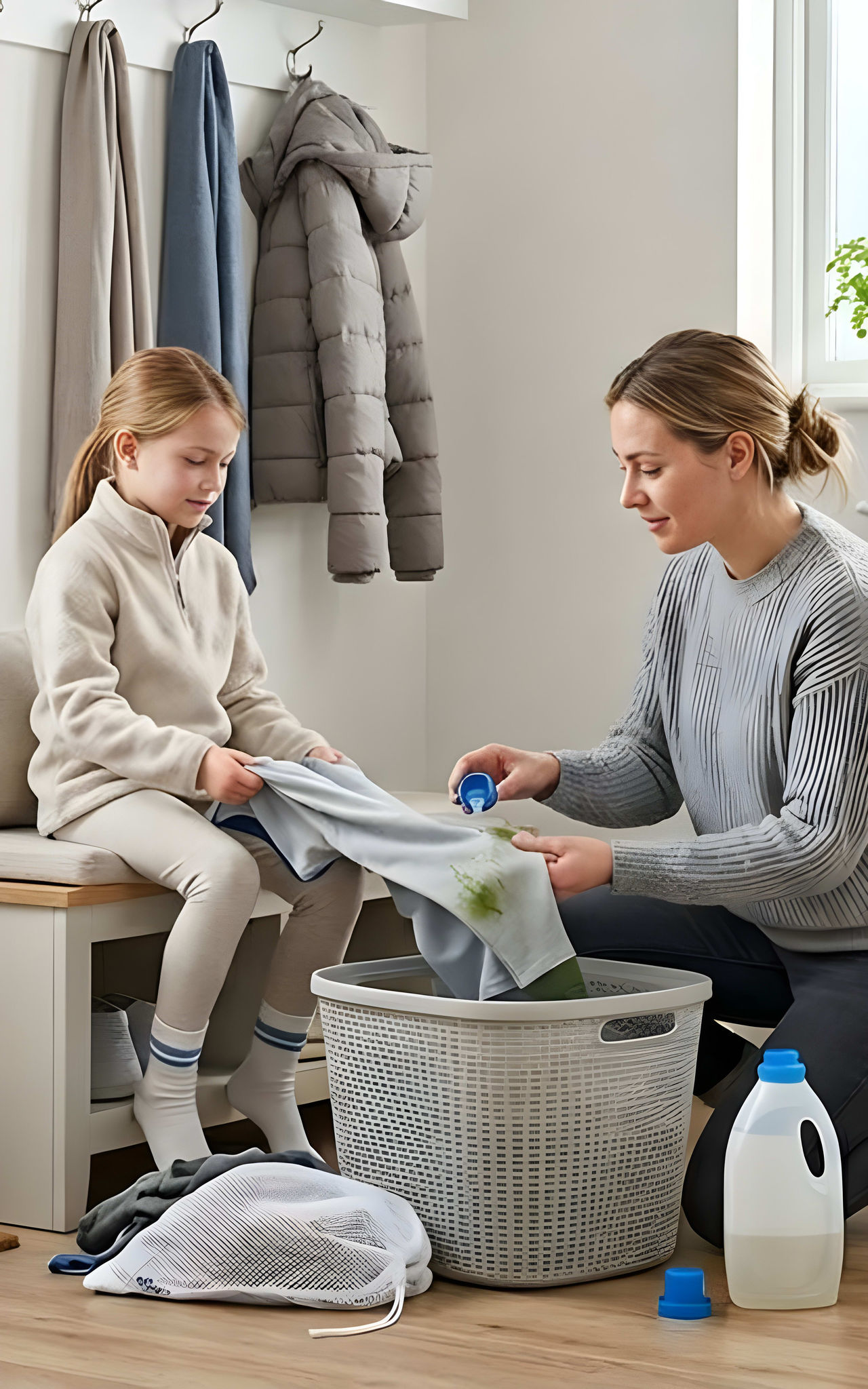
• Pre-treat with a small amount of liquid detergent on the mark, give it a short dwell time.
• For road salt on hems, dissolve with a cool water soak before the wash.
• Place items in the machine inside out to protect surfaces and prints.
Energy saving laundry that respects clothes and bills
Simple habits add up over the season.
• Wash full loads where practical. Partial loads use similar water and time.
• Use a high spin to remove moisture before drying. This lowers drying time, which supports energy saving laundry goals.
• Air dry where space allows. Position racks away from radiators for steadier room heat. Add a dehumidifier setting if available to reduce moisture build-up.
• For tumble drying, choose heat pump technology. Lower drying temperatures protect fibres and use less energy than standard vented models. Sensor drying helps stop at the right level, so no over-drying.
• Line up a weekly “essentials” load midweek, then a larger family reset at the weekend.
Where reliable appliances support efficient performance
When routines rely on low-temp laundry, dependable engineering keeps results steady. Beko designs for day-in, day-out use, with features that support cold wash habits and winter timing.
• ProSmart Inverter Motor. Efficient and quiet operation, built for long life. Selected models include extended motor warranties upon registration, for added peace of mind.
• AquaTech on selected washing machines. Water power accelerates the wash action for thorough results in shorter cycles, gentle on fabrics.
• SteamCure on selected washing machines. Steam helps loosen stains at the start and reduces creases at the end, which lowers ironing time on thicker winter layers.
• Daily Quick programmes on many models. A full load in as little as 28 minutes at low temperatures, helpful for midweek emergencies without throwing off the schedule.
• Heat pump tumble dryers. Lower temperature drying with sensor control, supporting energy savings and fabric care across the season.
Beko holds a leadership position as Europe’s number one large home appliances company, which reflects long-term investment in reliability and scale. That scale supports testing and continuous improvement, so winter loads stay predictable.
A weekend reset that keeps the week on track
Anchor the week with a clear plan that respects daylight and drying time.
• Friday evening. Sort by load, pre-treat sports kit, set the first cold wash overnight if your model offers a delay timer.
• Saturday morning. Run a mixed everyday load on a cold wash. Spin high. Move the first load to racks with good airflow, set a heat pump dryer for heavier towels if needed.
• Saturday afternoon. Run a wool-friendly programme for knits. Use SteamCure to soften creases if your model includes it.
• Sunday. Finish with schoolwear. Shirts on a cold wash with a high spin. A short tumble on a low temperature to finish, then hang straight away to reduce creases.
Quick wins for cold wash success
• Dose detergent accurately. Too little leaves residue, too much weighs down fibres. Follow the pack for load size and soil level.
• Keep zips closed and hooks fastened to protect knits and linings.
• Use laundry bags for delicates and small accessories like thermal gloves.
Frequently asked winter laundry notes
• Heavy jumpers take time to dry indoors. Lay flat on a rack to hold shape, turn once halfway.
• Sports kit needs airflow. Wash as soon as possible, then dry near a moving air source. A dehumidifier setting helps.
• Duvet days happen. For bulky bedding, check the machine capacity label and select the appropriate programme. If the item exceeds the drum size, a launderette service is safer.
With thoughtful winter home routines and the right features in support, cold wash laundry still delivers. Beko keeps the background work steady, so your home feels lighter, even on the frostiest week.
References: - Energy Saving Trust, “How to save energy doing your laundry,” https://energysavingtrust.org.uk/ (accessed seasonally for consumer guidance)