

Winter food storage Q&A for an efficient fridge | Beko
Winter food storage made simple. Q&A with practical tips for an efficient fridge to cut waste and save money during busy weeks.
Winter weeks, full diaries, fuller fridges
Short days, late school runs, Sunday batch cooks. Winter brings comfort food and a busier fridge. Food often ends up hidden at the back or pushed past its best. With a few smart habits and an efficient fridge set-up, waste shrinks and weekday dinners feel calmer.
Below, a clear Q&A to guide winter food storage, reduce spoilage, and ease the evening rush.
Why does food waste rise in winter?
Bigger shops, more leftovers, and packed shelves often lead to forgotten items. UK households throw away 4.7 million tonnes of edible food each year, much of it due to poor planning and storage [WRAP]. Cold weather does not slow the bin if storage falters.
What helps: - Plan portions for hearty dishes, avoid cooking more than needed. - Label and date leftovers so they move first in the queue. - Serve from smaller bowls, refill if needed, reduce plate waste. - Freeze extra portions for later in the month.
Source: WRAP, Household Food Waste in the UK.
What temperature suits winter food storage?
Set the fridge between 0 and 5°C. 4°C hits the sweet spot for safety and freshness. A fridge thermometer gives a quick check. Freezers should run at −18°C.
Steps: - Place a thermometer on the middle shelf, check weekly. - Adjust the dial in small steps until readings stay between 0 and 5°C. - Keep the fridge at least three quarters full, leave space for air to move.
Source: Food Standards Agency, Chilling facts.
How do I organise an efficient fridge for busy weeks?
A clear layout stops repeat buys and late-night bin runs. Group by zones and use the first in, first out rule. Put the next-to-use items at eye level so they leave first.
Try this: - Top shelf, ready-to-eat: yoghurts, cooked meats, leftovers. - Middle shelves: dairy, jars, open sauces, meal kits. - Bottom shelf: raw meat and fish in a tray to catch drips. - Crispers: fruit and veg, split leafy greens and ethylene-producers like apples. - Door: condiments and drinks, avoid milk here for longer life.
For extra support, selected Beko fridge freezers include features that help keep temperatures stable and airflow even across shelves, supporting an efficient fridge layout.
How do I store soups, stews, and traybakes safely?
Cool cooked food, then chill. Refrigerate within two hours of cooking. Eat chilled leftovers within two days or freeze for longer storage. Reheat until steaming hot all the way through.
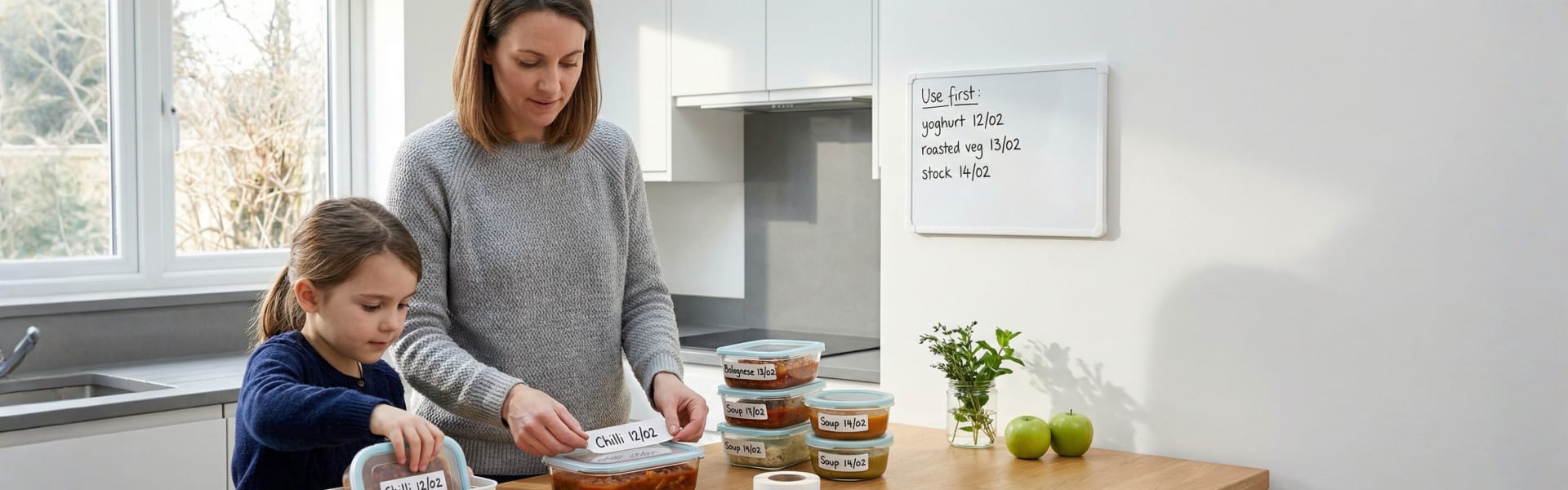
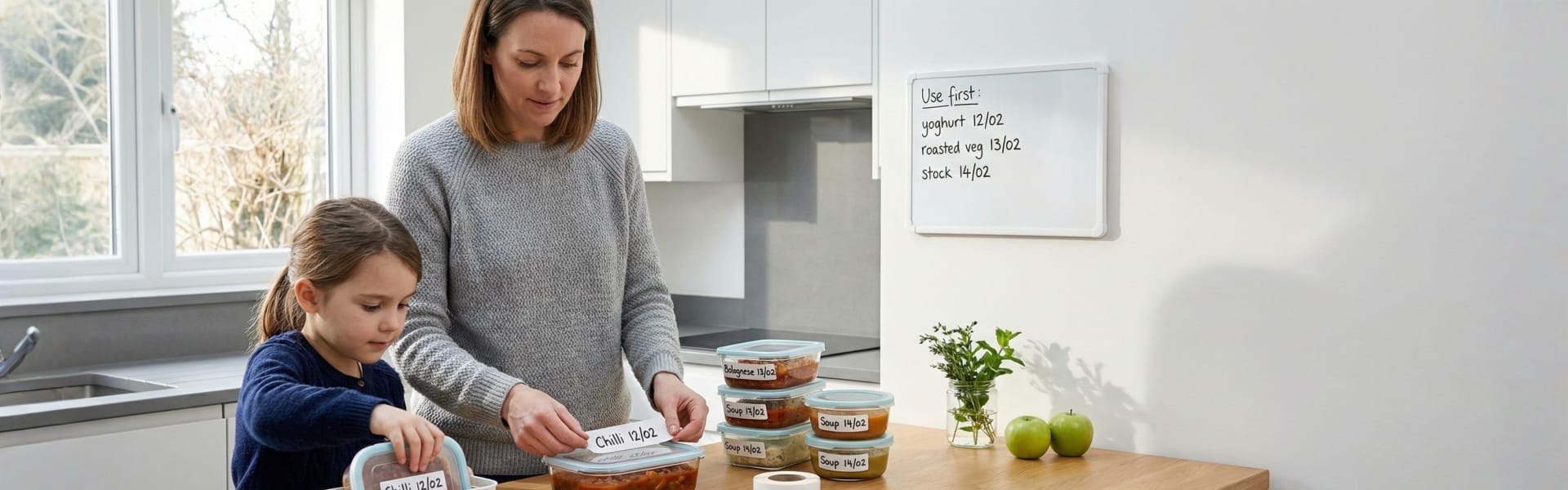
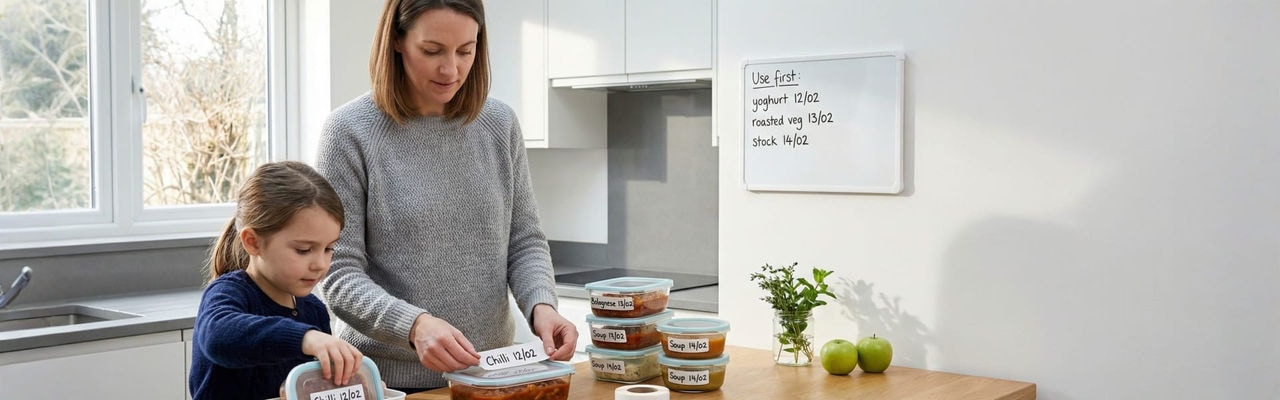
Mini checklist: - Portion into shallow containers for quick cooling. - Label with dish name and date. - Place on higher shelves, front row, to use first. - Freeze portions you will not eat within two days.
Source: Food Standards Agency, Safe leftovers.
How do I keep fruit and veg fresher for longer in winter?
Humidity matters. Leafy greens prefer a high-humidity drawer, while apples and pears sit better with lower humidity. Keep potatoes in a cool, dark cupboard, not in the fridge. Separate onions from potatoes.
Simple habits: - Store herbs upright in a jar with a little water, cover with a bag. - Keep bananas away from soft berries and leafy veg. - Prep veg for midweek, store in sealed containers with paper towels to manage moisture.
Source: Love Food Hate Waste, Food storage A–Z.
Which Beko features support winter food storage in an efficient fridge?
• HarvestFresh lighting. Mimics the sun’s daily cycle in the crisper to help fruit and veg stay fresh for longer, supporting nutrients over time.
• EverFresh+ drawer. Precision humidity control helps reduce moisture loss so greens last longer.
• NeoFrost Dual Cooling. Separate cooling systems help keep humidity levels stable and limit odour transfer between fridge and freezer.
• AeroFlow gentle air distribution. Helps reduce temperature swings across shelves, so items at the door and the back stay in step.
• Fast Freeze. Lowers the freezer temperature quickly, locking in quality when freezing batch-cooked meals.
• Frost Free freezers. No ice build-up, so space stays usable and airflow remains steady.
• Door Open Alarm. Alerts if the door stays ajar, helpful on busy evenings.
All features referenced from beko.co.uk. Availability varies by model.
How do I plan meals to prevent waste without extra effort?
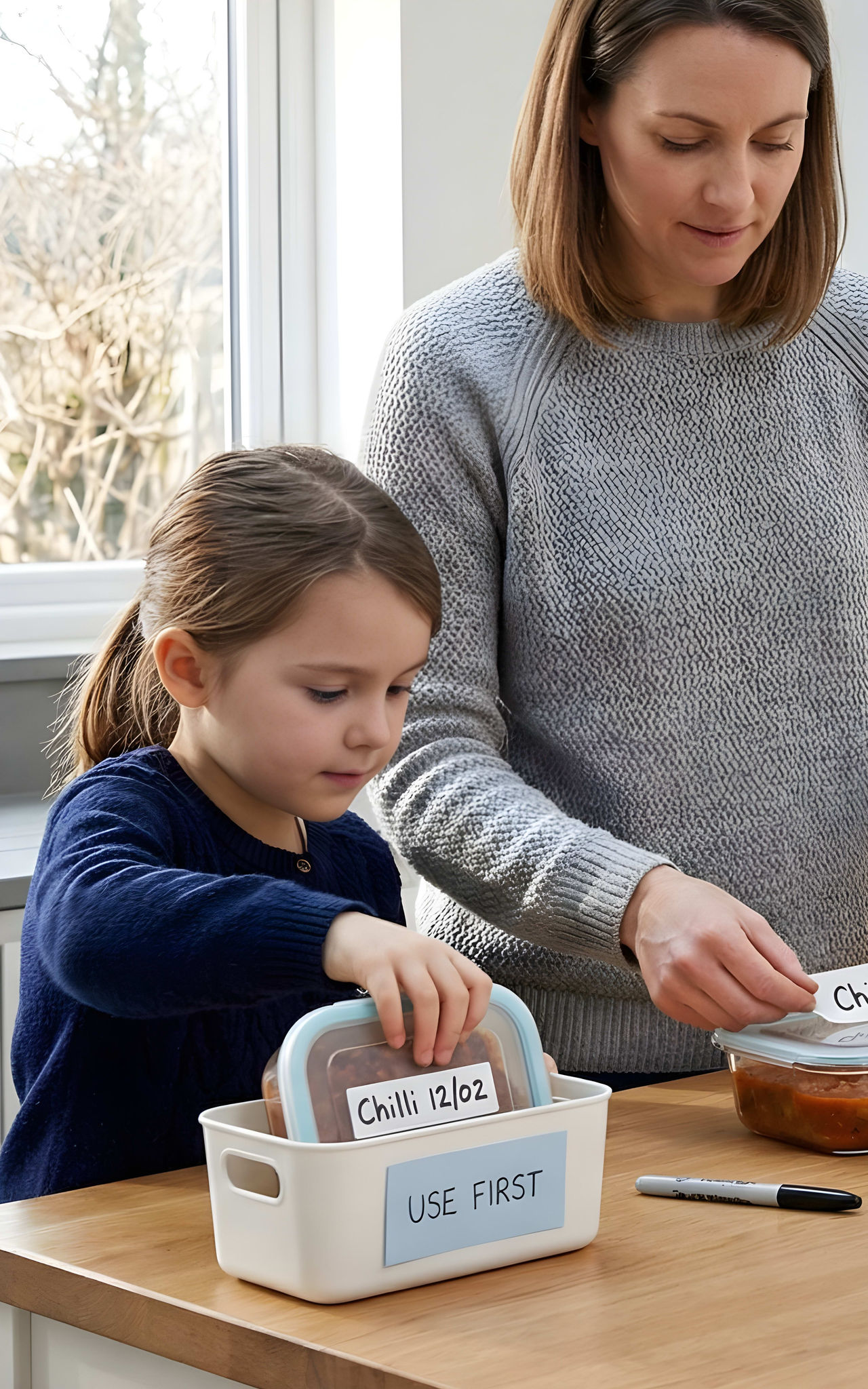
Think in building blocks. Choose two proteins and two veg that work across several dishes. Map three anchor meals, then plan leftover nights. A visible use‑me‑first box gives older items a final stop before meals.
Try this weekly flow: - Shop with a list that starts at home, check fridge, freezer, pantry. - Batch-cook one base, for example a tomato sauce, then spin into pasta, shakshuka, or soup. - Set one leftover night and one freezer night. - Keep a whiteboard on the fridge door for open items and dates.
Source: Love Food Hate Waste, Meal planning.
How does an efficient fridge help save energy and reduce waste?
Stable temperatures slow spoilage and support food safety. Good airflow stops warm spots and icy corners. An efficient fridge layout reduces door-open time, which supports both freshness and energy use.
Everyday habits: - Let hot dishes steam off before chilling to avoid warming the cabinet. - Wipe door seals, replace if they feel loose. - Space items slightly so cool air flows around tubs and jars. - Defrost older freezers that build ice, or choose a Frost Free model for steady performance.
What should I freeze, and how do I freeze it well?
Freezing holds food at its best when time is short. Portion before freezing so defrosting fits weeknights. Label and date everything.
Freezer wins: - Bread, freeze sliced for easy toast. - Cooked grains, freeze flat in bags. Break off what you need. - Soups and stews, freeze in single or family portions. - Herbs, chop and freeze in oil in ice cube trays. - Berries, freeze on a tray, then bag for smoothies or porridge.
Source: Love Food Hate Waste, Freezing and defrosting.
What belongs on the winter leftovers checklist?
• Keep a roll of labels and a marker beside the fridge.
• Stack leftovers in clear, shallow tubs.
• Add a weekly “fridge forage” meal, for example frittata, fried rice, or loaded soup.
• Stick to the two-hour chill and two-day eat rules, freeze the rest.
Source: Food Standards Agency, Safe leftovers.
Small changes, less waste, calmer evenings
With thoughtful winter food storage, an efficient fridge, and a few steady habits, busy weeks feel lighter. Beko stands behind the daily rhythm, keeping ingredients fresh and routines confident.
References: - WRAP, Household Food Waste in the UK: https://wrap.org.uk - Food Standards Agency, Chilling facts and safe leftovers: https://food.gov.uk - Love Food Hate Waste, Storage and planning: https://lovefoodhatewaste.com