




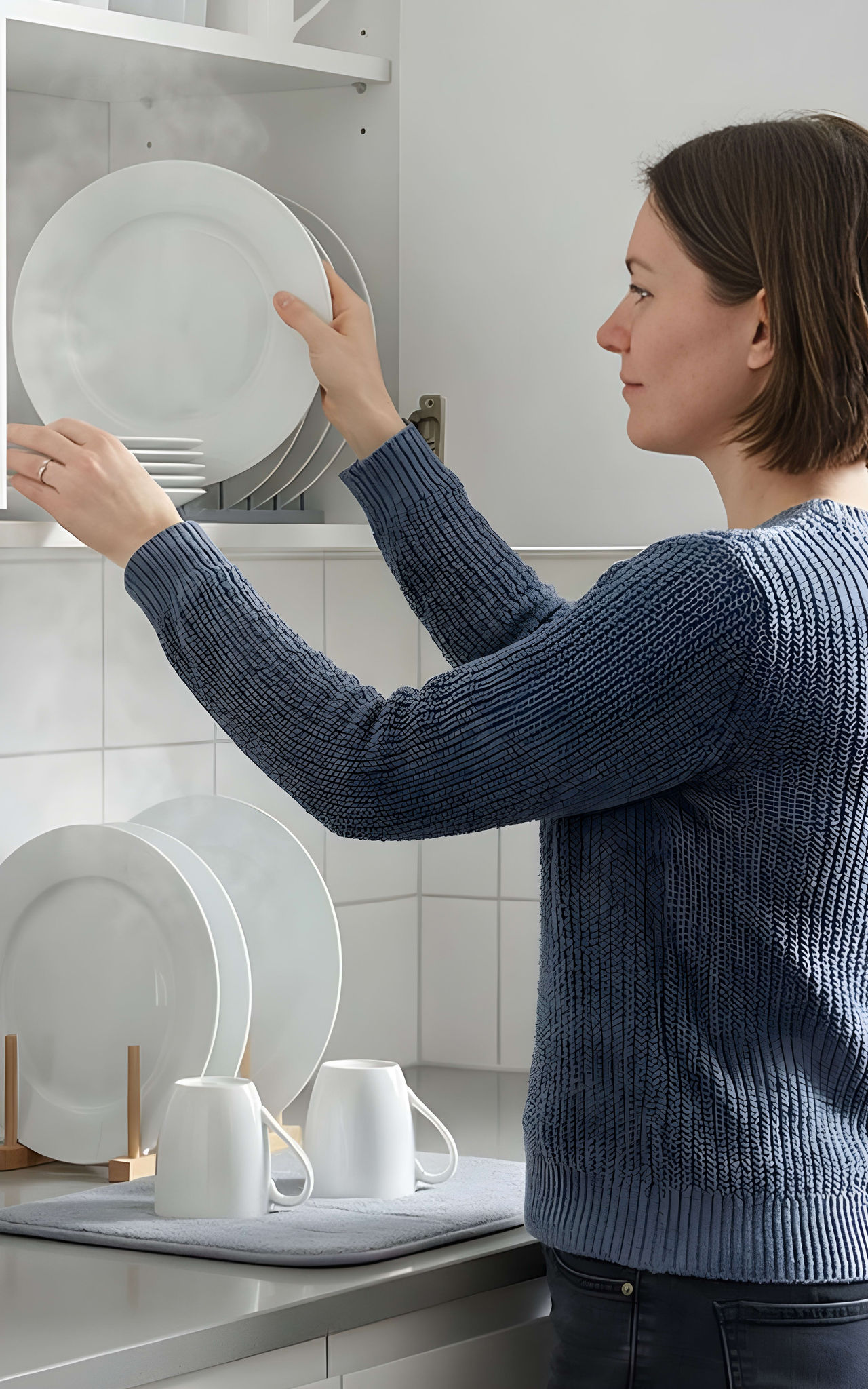
Winter dishwashing, sorted
The nights draw in. Big pans from stews and roasts stack up fast. Kitchens feel cooler, and drying takes longer. Winter dishwashing needs a little extra thought, so home life keeps its calm. This Q&A brings straightforward answers, with reliable, value-led tips that work for family routines.
Why does winter dishwashing feel different?
Colder inlet water slows heat-up time, so some programs run longer. Steam condenses on cool plates and glasses, so drying feels less complete. Kitchens with lower room temperatures also hold more moisture after a cycle.
Practical steps that help: - Choose Eco for most loads. Longer time, lower temperature, less energy. - Run full loads. Fewer cycles mean lower bills and less steam in the room. - Open the door a touch when the cycle finishes, then wait 10 minutes before unloading.
Is cold-water washing safe and efficient in winter?
Yes. Modern dishwashers are designed for a cold-water inlet. They heat water internally to the exact temperature the program needs, so performance stays consistent through the seasons. A cold feed protects internal parts from scale that forms at high inlet temperatures.
For steady winter results: - Keep salt and rinse aid topped up, especially in hard-water areas. - Use the right dishwasher tablets or detergent, not hand-washing liquid. - Check the spray arms move freely to maintain wash pressure.
Which settings work best for winter dishwashing and lower energy use?
The Eco program suits everyday loads. It uses lower temperatures and longer run time for high efficiency. For mixed or unknown soil levels, an auto program uses sensors to adjust water, heat, and duration for the load. When time is tight, a quick program helps on busy evenings.
Beko dishwashers include: - Eco Program for energy-smart daily washing. - Auto Program that adjusts to the load for steady results with less guesswork. - Quick & Shine, a 58-minute wash for light to medium soil, ideal on weeknights. Use Eco for routine plates and glasses. Switch to Intensive for heavy winter bakeware and roasting trays.
How do I improve drying on cold days without wasting energy?
Cold rooms slow evaporation. Rinse aid lowers surface tension so water sheets off faster. Plates and pans spaced with a finger-width gap dry better than tightly packed stacks. A short wait before unloading helps heat complete the job.
Tidy end-of-cycle habits: - Select the program’s drying option when available. - Angle mugs and bowls to prevent pooling. - Open the door slightly at the end, then unload the bottom rack first to avoid drips.
What loading tips help with chunky winter cookware?
Large pots, casserole dishes, and roasting tins dominate winter. Good loading protects spray paths and improves reach into corners.
Try this approach: - Bottom rack for heavy items. Face the dirtiest surfaces toward the spray arms. - Fold down tines for trays and wide pans. Keep tall items away from the door to avoid blocking detergent release. - Top rack for glasses, mugs, and small bowls. Angle items so water runs off. - Cutlery basket or tray, mix up spoon handles and separate knives and forks to prevent nesting.
Many Beko models include a height-adjustable upper basket and folding plate supports, helpful when that tall stockpot needs space.
Do I need to pre-rinse plates in winter?
No. Scrape, load, and let the dishwasher do the work. Pre-rinsing wastes water and energy. Modern detergents and spray systems handle normal food residues well. The Energy Saving Trust advises skipping pre-rinse and using Eco to reduce bills and impact on the planet. Source: Energy Saving Trust, “How to use your dishwasher efficiently,” energysavingtrust.org.uk
Smart prep: - Scrape solid leftovers into the food bin. - Wipe excess grease with a piece of kitchen roll before loading heavy items. - Choose Intensive for baked-on winter dishes when needed.
What routine maintenance helps a winter-ready dishwasher?
Regular care keeps wash quality high, even with colder inlet water and heavier cookware.
Monthly checklist: - Clean the filter and check spray-arm holes for blockages. - Refill salt and rinse aid. - Wipe the door gasket. - Inspect inlet and drain hoses for kinks. - Run a maintenance wash with a dishwasher cleaner when the machine is empty.
Beko dishwashers are built for dependable daily use. Simple upkeep supports long-term reliability.
Is placement in a cold utility room an issue?
Low ambient temperatures slow drying and raise condensation. If the space sits near freezing, parts and hoses risk damage. Keep the area above 5°C, insulate exposed pipes, and allow space around the appliance for airflow. If a hose freezes, wait for a full thaw before use.
Safe winter setup: - Keep the door gasket clean so the seal stays tight. - Do not trap the inlet hose behind heavy items. - Avoid switching programs mid-cycle in cold rooms, temperature swings reduce drying efficiency.
When should I switch programs for heavy winter loads?
Use Eco for daily plates and glasses. Move to Intensive for baked-on lasagne, roast trays, and casserole dishes. An auto program guides itself, helpful when loads mix glassware and pots. For a hygiene lift during cold and flu season, a higher-temperature hygiene option on select Beko models delivers an extra hot phase for added reassurance during final rinsing.
How do Beko dishwashers support winter dishwashing?
• Reliable build for daily family use, designed for long service life and steady results.
• Energy-smart programs such as Eco and Auto that match real homes, lowering bills without fuss.
• Flexible interiors with adjustable baskets and folding supports that fit big winter cookware.
Set the program, load it well, and let the machine handle the rest. That is a Beko state of mind, all season long.